
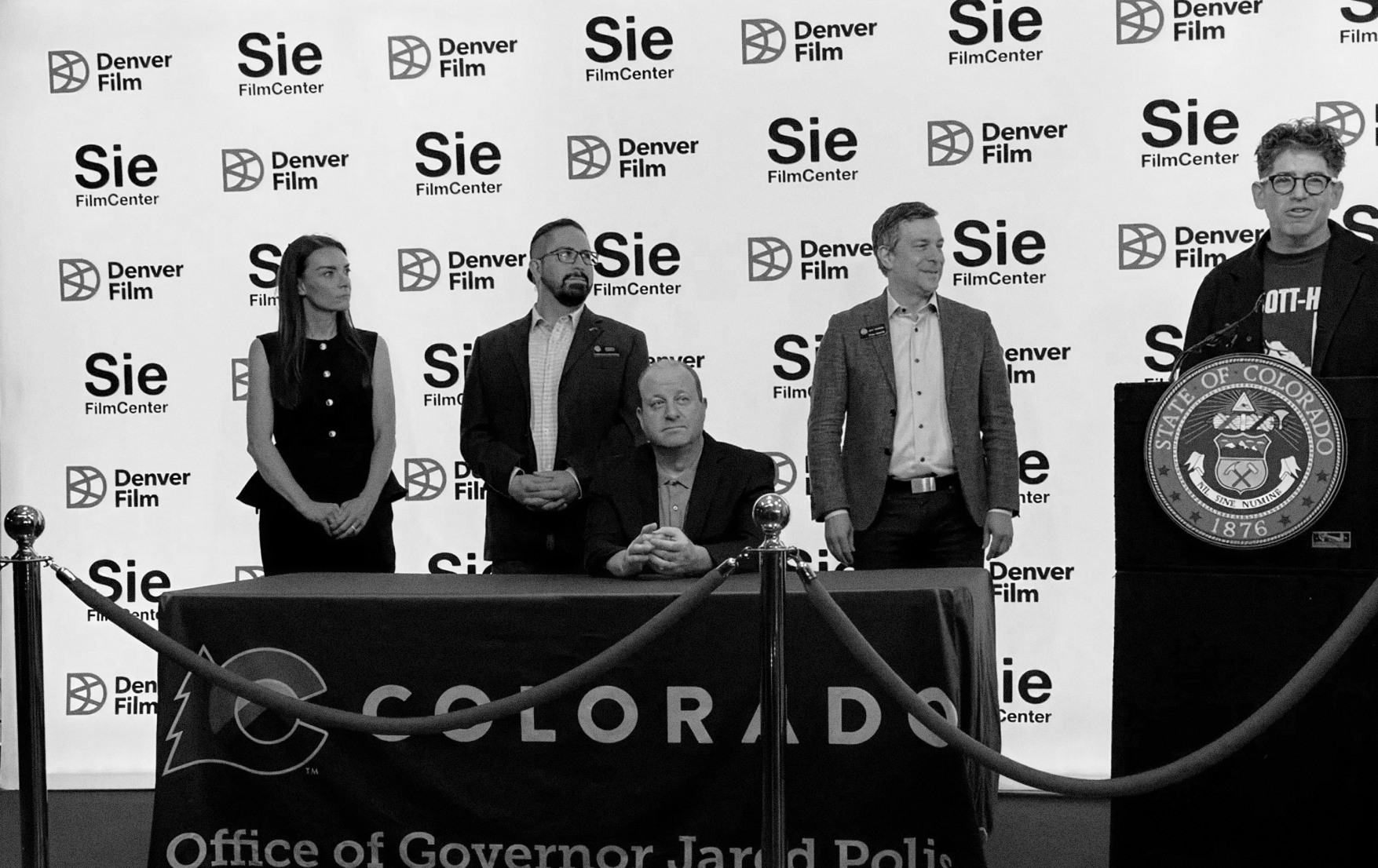
A company form built for artists. A-Corp is a new legal structure that helps creative people keep control, protect their work, share ownership with collaborators, and raise support without giving away the art. Now law in Colorado. First formations expected in early 2027.
What the law does
The Colorado Artist Companies Act creates a new kind of limited liability company built specifically for artists and creative work. Here’s what it guarantees:
Artists must own at least 51% of all voting power at all times. This is locked into the statute and cannot be changed by an operating agreement. The people making the art always control the company.
Every A-Corp has a stated artistic mission in its founding documents. The company can specify that the mission has primacy over financial objectives, that they're equal, or define its own balance. The mission has legal weight.
Artistic work contributed to an A-Corp is protected by reversionary rights. If the company dissolves, the work returns to the artists who made it. Non-artist investors can participate economically without owning or controlling the creative work.
A-Corp Shares let collaborators, supporters, and investors participate in the value of the work while artists keep voting control and creative authority.
The A-Corp creates a new type of ownership unit — the A-Corp Share. A-Corp Shares can be issued to artists in exchange for their creative contributions, and be structured as fractional units that let collaborators share in the upside of work they helped create. Plus an artist's creative work is recognized as a capital contribution with real value, not just sweat equity.
In early 2027, you’ll be able to create your own Artist Corporation in Colorado. We will provide easy to use forms and an understandable process to help you get started.
An Artist Corporation, or A-Corp, is a new type of legal entity designed specifically for creative people. It combines the best elements of LLCs, corporations, and nonprofits into a single purpose-built structure that reflects how creative work actually happens — collaborative, IP-driven, and mission-oriented. It can represent a single artist or a group of collaborators.
85% of artists earn less than $25,000 a year, and only about 13% earn a full-time living from their practice. That isn't a talent problem — it's a structural one. Creative people have never had a legal form designed for their needs, so they've had to adapt structures built for conventional businesses, or operate with none at all. The A-Corp closes that gap.
Yes — the Artist Companies Act was signed into law in Colorado, with standardized formation documents arriving by July 2027. More states are on the way. Everything on this site is generated from the actual legislation: you can walk through registration, run the financial tools, and compare structures today.
Both. An A-Corp can represent a single individual artist or a collective of collaborators. The structure serves someone formalizing a solo practice as much as a band, a publishing group, a design collective, or any other form of creative collaboration.
LLCs offer liability protection and pass-through taxation, but they don't issue shares, have limited tools for sharing equity with collaborators, and provide no protections for creative control or IP governance. An A-Corp offers everything an LLC does — plus the ownership and governance features creative work actually requires.
Artists do — by law. Artists must own at least 51% of all voting power at all times, locked into the statute itself. Investors can hold rights to distributions, royalties, and revenue without getting any voting power or creative control. The artistic mission has legal weight.
Your artistic work can never be transferred to non-artist investors or third parties. If the company dissolves, all artistic work reverts to the artists who created it — and these reversionary rights are not available to creditors. The work stays with the people who made it.

This is a bold step forward to say artists are not well served by the current options for legal recognition.
Read at The Art Newspaper →
The new framework would allow artists to have investors without granting shareholders ownership of their artistic output.
Read at Hyperallergic →
A new legal structure designed to protect and support artists.
Read at NPR →
A new corporate form that artists can adopt.
Read at Frieze →