
How Artist Corporations Became Law
The hearing
It's an unseasonably snowy Spring morning in Denver, and the legislative advisor I'm working with is stressed. We're in the basement of Colorado's ornate Capitol Building in a hearing room. Thirteen representatives from the House Business Affairs & Labor Committee of the Colorado House of Representatives sit on a riser in front of us. Our bill — the Colorado Artist Companies Act — is being considered by this group for the first time.
The Committee Chair calls the meeting to order, and invites the bill's House co-sponsors — Democrat Matthew Martinez and Republican Rick Taggart — to introduce it. Each speaks to the bill from their perspective. Martinez, a musician who represents a majority Latino district, speaks about the challenges of making a living as a creative person. Taggart, a rancher, shares the positive economic impact the arts have in rural areas like his.
The legislators begin asking questions. Several skeptical. What does this do for an artist? How was this different than what was here? Explain to me how this works.
Martinez and Taggart handle the questions well. But watching from the audience without being able to speak is agonizing. We've learned through many iterations how to tell this story. This is the moment to share it. For now, we have to wait.
Coming into the meeting, our advisor had been confident. But now, faced with one of the last consequential hurdles in our multi-year effort, they seem less certain.
"This is closer than I thought," he says.
"How close?" I ask.
He tallies two columns on his notepad.
"7-6."
He leans in.
"And I'm not sure which way."
The spark
It's two years earlier. Summer of 2024. The Artist Corporation idea is nowhere in our imagination. Instead we're overwhelmed by printing and shipping The Dark Forest Anthology of the Internet, a book we'd published featuring a dozen authors that was selling well — earning six figures in book sales in less than a year.
One day an old friend who works with a large philanthropy reaches out. She's supporting a cohort of notable artists and asks if I can speak with them about creative entrepreneurship. I agree, and soon am immersed in a series of conversations about how artists approach their work. One tidbit especially stands out: many had made custom, complicated legal structures that were strikingly similar to access funding. Our friend remarked that people were hiring lawyers to repeatedly make these similar but bespoke structures for artists, many of whom ultimately regretted the administrative burdens they created.
Two weeks later, I'm struggling with the process of creating an LLC for the Dark Forest group. My intention is to make a basic structure that reflects how we operate: shared IP, distributed ownership, and a collective treasury to fund future work. Legally describing that proves to be more frustrating and expensive than expected.
Why was it so hard to make something that reflected a creative practice without spending a bunch of time and money to do it?
Peace, love, and corporations
Why do we need legal containers at all?
Many of us come up with idealized concepts of creative environments where money is neither an obstacle nor explicitly a goal. In this world, everyone magically has enough and staying "pure" means keeping the business side of things as far away from art-making as possible.
This is the mindset I grew up with, especially as a fan of Dischord punk and hardcore, with its strong egalitarian streak that believes money always corrupts. There's truth to this, but generally the longer you last in your career, the less political money becomes and the more it becomes practical financial sustainability.
Taking good care of the business side of art-making is the foundation for true independence, as evidenced by the punk band the Minutemen's credo of "jam econo." The less you spend on luxuries, the more time you can spend on art. The better you understand the infrastructure of your practice, the more you're able to influence it.
I didn't fully appreciate this until Kickstarter, when we began to explore the idea of converting our company to become a Public Benefit Corporation, a new legal container that let companies have legally protected non-financial goals. We'd originally made Kickstarter a Delaware C-Corporation on the advice of our then-lawyers. We knew this form was meant for traditional businesses, but we vowed to be ourselves anyway. We didn't want to sell or go public. We wanted to stay independent and fight for our values.
But as things went along, we became aware of how hollow these words were without anything legal backing them. By the conventional wisdom of corporate expectations, it was our duty to maximize shareholder value above all. By being a Public Benefit Corporation, however, we could write our own mandate and explicitly choose to balance money and values in ways that had legal protection. This is what we did.
As I thought about the possibility of the A-Corp, I reached out to my friend to see what she thought.
"Got a wild idea," I text.
She immediately calls.
"Love it," she says. "Let's get some lawyers working on this. Can you get me a list of questions?"
"How soon?"
"Tomorrow?"
I agree. That night I make a list of ten questions to share with lawyers, including:
- What definitions or qualifications exist to legally define creative people?
- How many people get 1099s each year for creative work?
- How could we define a "minimal viable company"? How reduced can administrative burdens be?
- What legal protections or benefits could an A-Corp provide for intellectual property rights?
- What would it take for an A-Corp to accept both commercial revenue and philanthropic funds?
The next week there's an introductory call with two lawyers, who ask more questions. They promise to get back to us after talking to more people.
A month later they suggest a call to share their findings. They don't mince words.
"We think this might be something," they begin.
"Go get 'em"
The legal green light puts the dominos in motion. These lawyers will help, but we need more specialized legal experts, too. Turns out they know just the person: a powerhouse attorney from California named Susan Mac Cormac — a partner at Morrison & Foerster who's helped successfully create and work on new legal forms before, from the PBC to more bespoke structures.
I meet Suz, as she is known, for the first time on a call a few days later. It's immediately obvious she's spent time in some tough rooms. She speaks confidently, with volume. She has, in a word, swag.
We immediately take a liking to each other.
Soon, a core group of five of us — Suz, my friend, two other attorneys, and myself — start having a weekly call. We divvy up the work. While lawyers dive into legal rabbit holes, I talk to artists and industry leaders, circulating the A-Corp idea, getting their feedback, and bringing it back to the team.
The process has a natural momentum. One good conversation leads to three introductions, which leads to three more. My friend Ian Rogers introduces me to Rick Rubin, who quickly becomes a behind-the-scenes champion. Through Rick we meet the heads of major labels, managers, lawyers, and artists throughout the creative ecosystem.
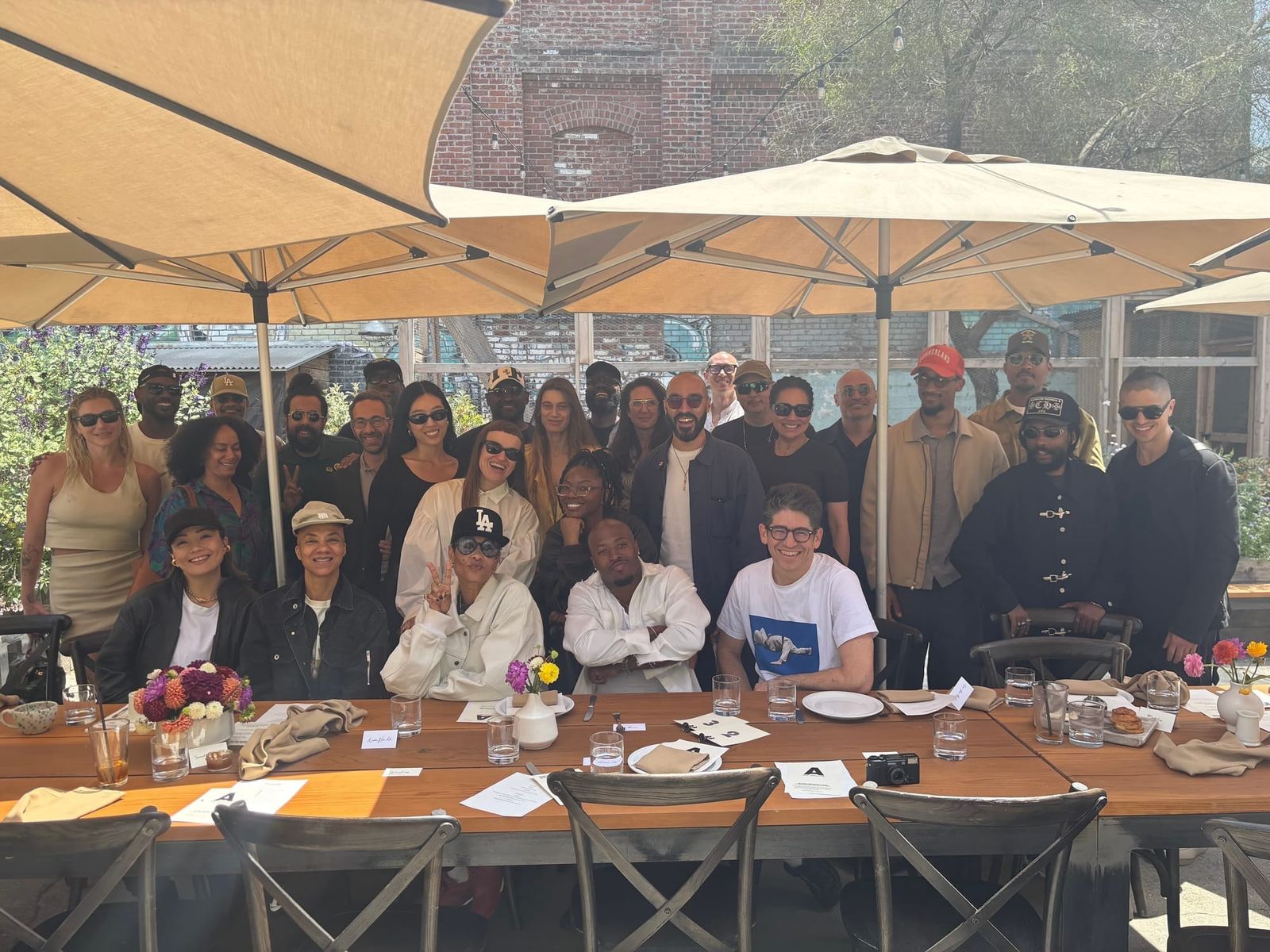
An artist brunch we hosted in LA later in the process.
The most memorable exchange comes early on when we're interviewing the opera director Kaneza Schaal, whose work pushes the edges of artistic and legal practices. After learning about her work and sharing what we're up to, she expresses enthusiasm with something I'll never forget.
"Go get 'em," she says.
The A-Corp was alive.
What the A-Corp does
As we take in what we hear from artists, compare it with our research, and our own experiences, a few specific needs emerge:
- An administratively minimal structure an artist could understand and feel comfortable setting up
- Protection and clarity of ownership for IP
- Access to funding and investment
- Access to health care
- Tools for sharing equity among collaborators
- Access to both commercial and philanthropic revenue
Several of these were things we knew we could address, and they became the bones of our draft proposal, which stated that an A-Corp would:
- Be at least 51% owned and controlled by artists and creators
- Have a legally protected creative mission
- Simplify protecting and sharing ownership of IP, including reversionary rights where creative ownership stays with the artist, even if the A-Corp dissolves
- Use the market power of creative people using the same system to advocate for A-Corp group plans from health care companies
- Simplify creating and sharing fractional ownership among collaborators and investors for creative studios and work
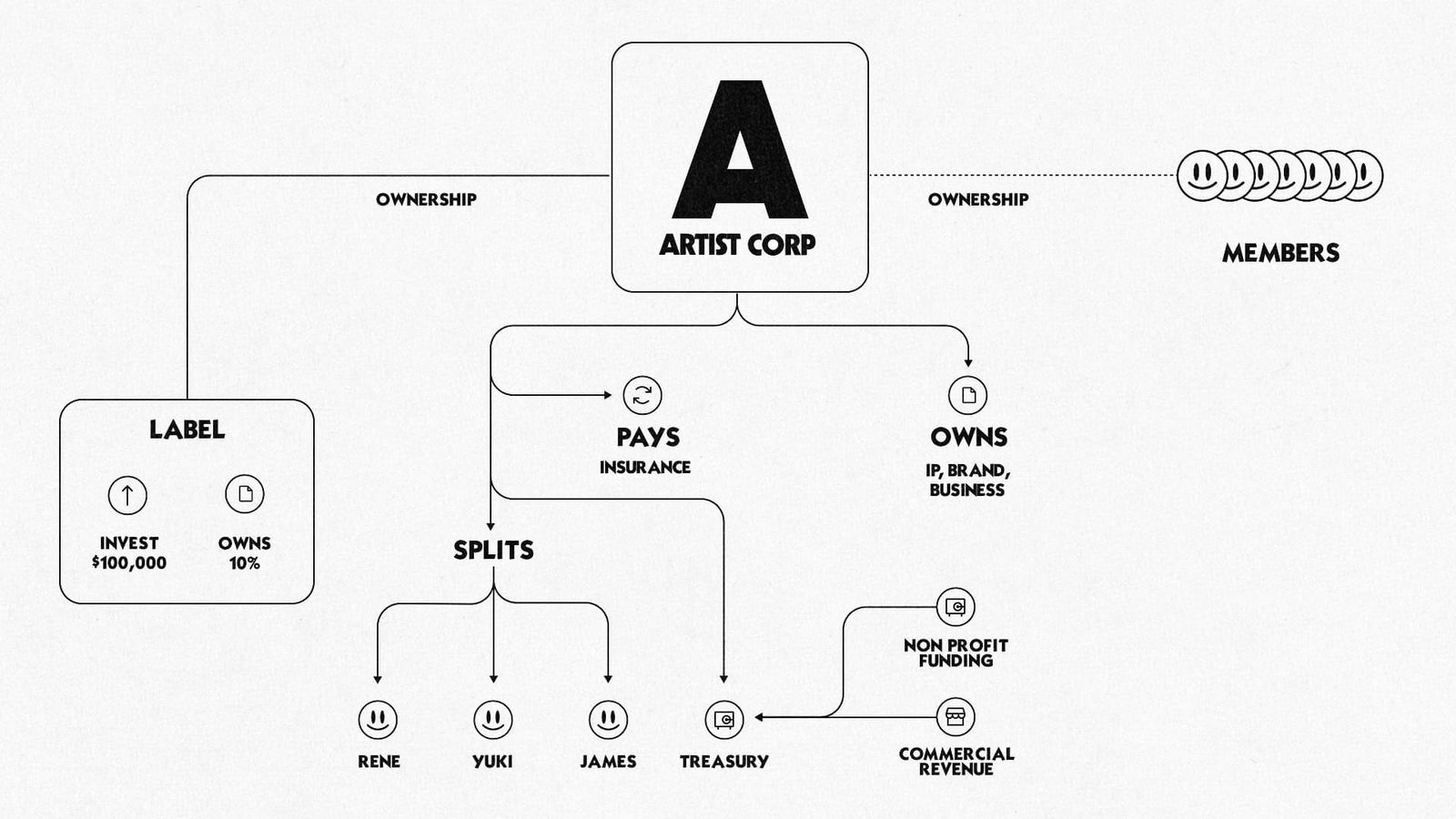
Allowing Artist Corporations to directly accept philanthropic funds requires changing federal tax law, which we're unable to do this go-around. Instead we hone in on what can be achieved at the state level.
The question was where. And when. And how, come to think of it.
The main stage
A funny thing happens when you're working on something not many people know about: people secretly talk to each other about it. And sometimes, out of nowhere, unusual, life-changing opportunities appear.
This is what happens in January 2025 when Helen Walters, Chief Curator of TED, emails out of the blue. A mutual friend had whispered to Helen what we were up to. The fact that the project wasn't public sparked her interest more. After listening to me talk about it for a half-hour, Helen makes a course-shifting invitation: how would I feel about sharing this idea on-stage during the opening night of TED in three months?
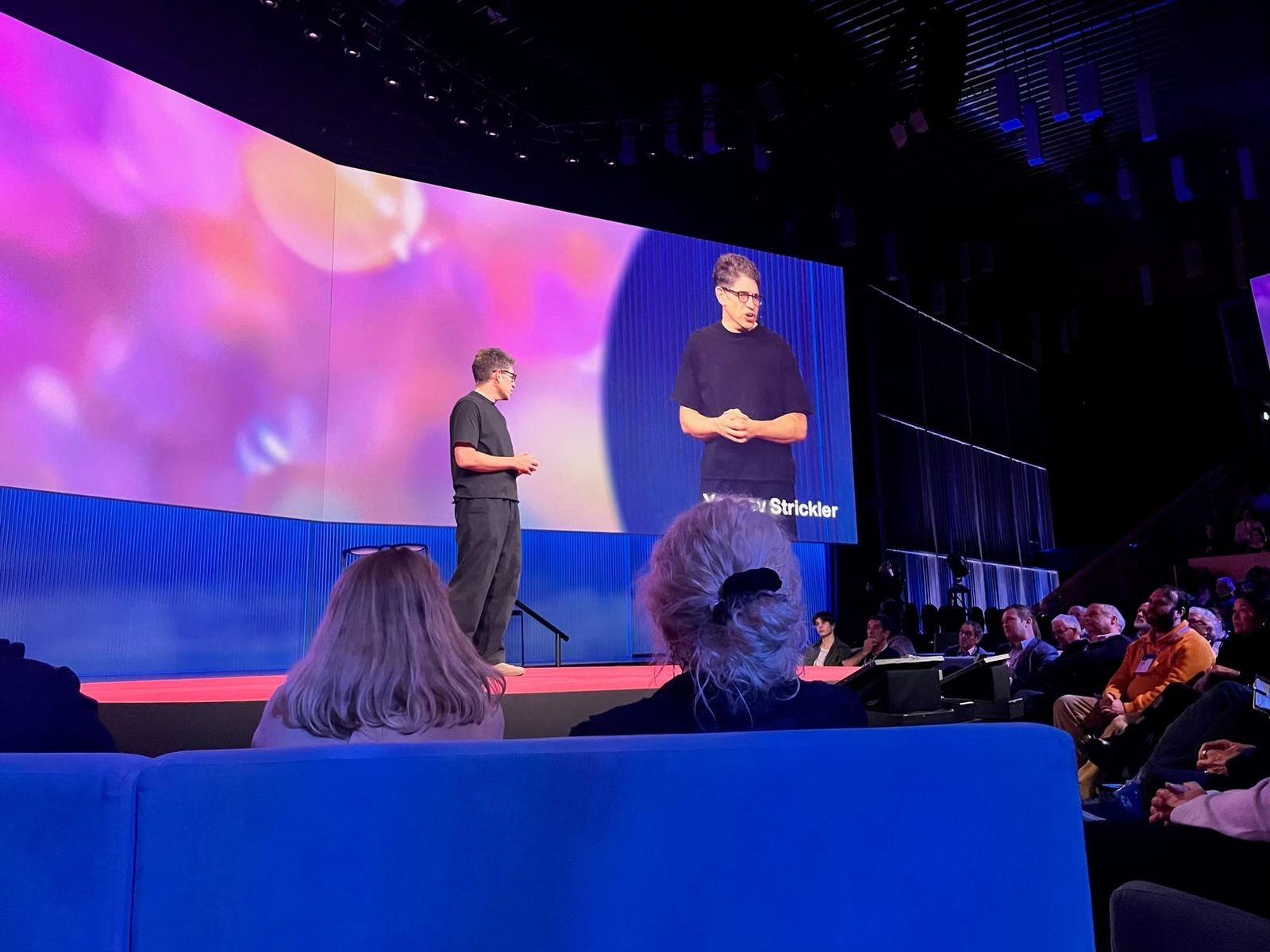
Giving the talk opens the door to all that comes next. (I recounted the story of the TED talk here.) Within the first 24 hours, I speak face to face with at least 100 people who express enthusiasm and high expectations for A-Corps.
Several say something that stays ringing in my ears when I finally fall asleep that night: you should bring this to Colorado.
Interlude: How corporate law is made
Boring but important things to know:
Corporate law is set at the state, not federal, level in America, through the process of laws and amendments.
Public Benefit Corporations became law state by state as advocates and legislators made it happen — a process ongoing almost two decades later.
Some states, like Delaware, allow people to be anywhere but form a legal entity there.
Colorado allows for people from out of state to form businesses there, provided they go through something called a registered agent process.
Colorado has been a legal trailblazer for cooperatives, and adopted the Public Benefit Corporation statute in 2013.
Oh Colorado
TED is April 2025. By that September, I'm on my third trip to Colorado, with a growing network to show for it. It's on this trip that I become more closely connected to two people without whose support the law might never have been proposed.
In Denver I meet Josh Blanchard, Director of Colorado Creative Industries, and Meredith Badler, Deputy Director of the Colorado Business Committee for the Arts (CBCA). Both, I learn, represent important nodes in the Colorado creative landscape. Blanchard's role within the Governor's office brings a specific focus on driving creative economic growth in the state. Badler's role within CBCA similarly focuses on the needs of Colorado's artistic community, but as an independent nonprofit.
The two of them become the A-Corp's most influential champions in Colorado. Badler invites me to the National Volunteer Lawyers for the Arts Conference in Denver, where forty people representing organizations that connect artists with legal assistance scrutinize the idea. Blanchard floats the idea within the Governor's office, and hosts a gathering for me at the offices of the arts foundation Bonfils-Stanton. Soon, members of the Governor's legislative staff are joining our weekly calls. The coalition is growing.
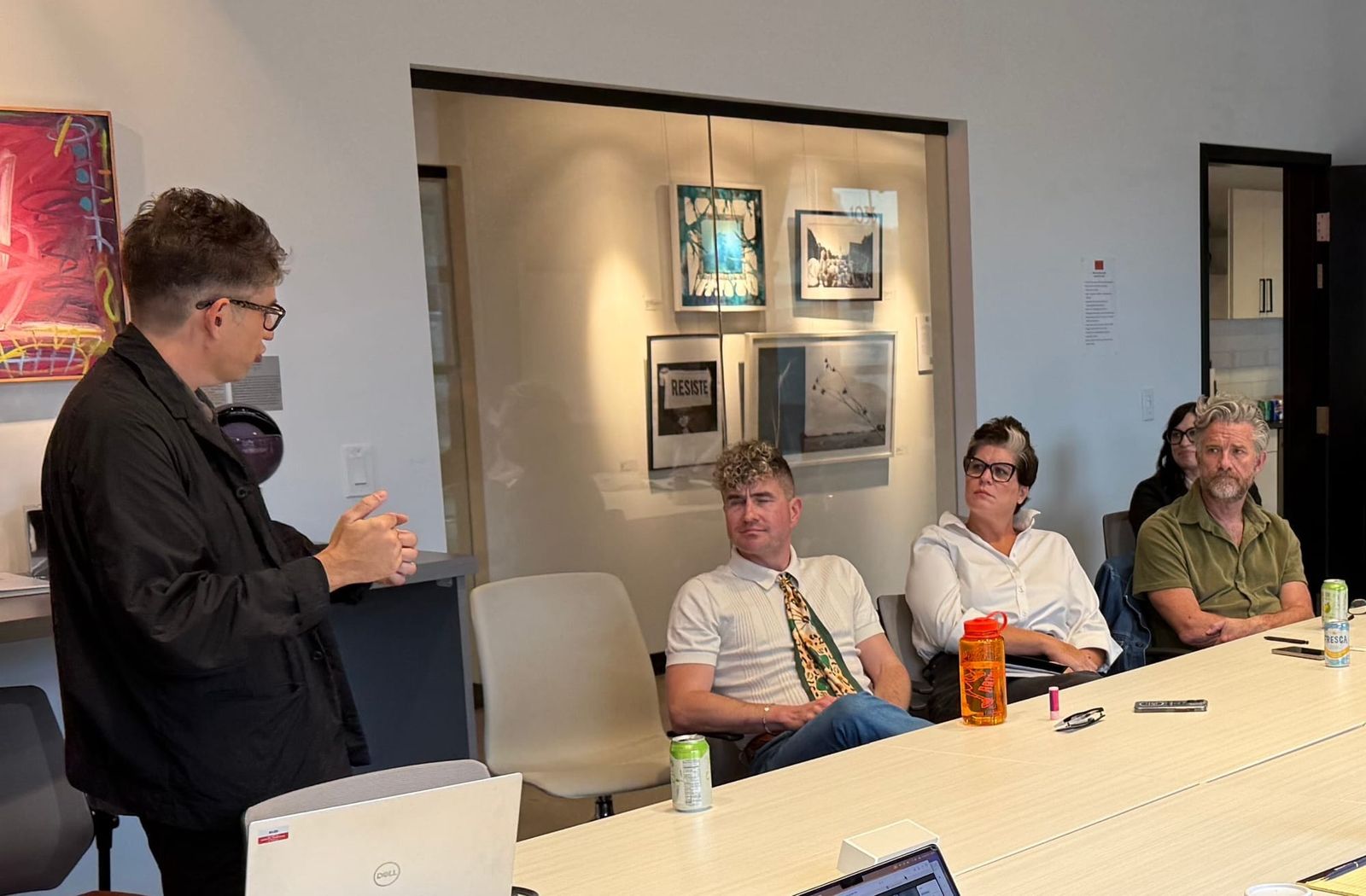
Speaking to arts leaders at Bonfils-Stanton, October 2025.
Then, another breakthrough. A musician who releases work on Metalabel randomly emails: he lives in Colorado and an old friend is an influential Colorado Senator. Would I be interested in an introduction?
A month later I'm sitting in the meeting room of the oldest hotel in Denver with Senator Jeff Bridges (no, not that one). Over several phone calls we get to know each other and talk about the bill. There's a mutual enthusiasm in making A-Corps happen. As Chair of the powerful Budget committee, Senator Bridges is exactly the sort of person who can do that.
But first, we have to learn the rules of the game.
The rules of the game
"33, 18, and 1," the woman says. "You get 33, 18, and 1 and you've got yourself a law."
A collaborator and I are on the phone with a group of political consultants. Our third conversation with a group that week. This one offers something we're especially looking for: bipartisanship. Their team had experience on both sides of the aisle. They thought our way of talking about Artist Corporations would connect.
We weren't framing artists as a group in need of charity.
We were framing them as an economic constituency in need of opportunity and power.
A workforce and value-creation class that was underserved and underdeveloped, despite clearly being a growing and future-oriented part of the economy. People reading this probably believe this is true. I was surprised to find many political officials believe it, too, and could point to evidence of it happening — places with culture seeing more tourism, higher property values, people finding them more livable. These outcomes were far from theory.
This is the message to Senator Bridges and the drafting committee of people we rally to help shape the law. At the heart of the drafting process are four of us: Susan Mac Cormac, Stephanie Drumm (a Morrison & Foerster Associate in Denver), a bill author from the legislature, and myself. Attorney Jason Weiner and members of the Colorado Revenue and Secretary of State offices, and other experts on tax and IP, also advise us.
I become the traffic cop of this process, bouncing between perspectives as we map out our approach. Suz and Stephanie take the lead and write the first draft over the Christmas holiday, taking the learnings we gathered from the process and arduously connecting them with the intricacies of Colorado law — on a tight timeline.
At the advice of Senator Bridges, we hire a former state budget director to analyze the bill and what it would cost. (Colorado has a balanced budget law that creates lots of unintended consequences.) Getting his eventual greenlight that this will not create a meaningful cost for the state (less than $100,000 to set up) paves the way for bipartisan supporters to sign on.
Over the next month we work through revisions of the law, incorporating multiple rounds of feedback from a variety of stakeholders and specialists. Finally, in early March, Senator Bridges and Republican Senator Marc Catlin introduce SB26-133: the Colorado Artist Companies Act that creates the A-Corp. The bill contains the text we had collectively written — ideas we'd researched, tested, and refined, now formalized into law.
With the support of Bridges and Catlin — both senior figures in their parties — the Senate moves quickly. It unanimously passes committee. The Senate overwhelmingly passes the law too. We get our 18 votes and then some — 31 to 3. The first step complete.
But the legislative calendar is short. As the session enters its final weeks, the law still has to move through the House of Representatives — a whole other process.
"This," our political consultant tells us, "is where things can get unpredictable."
The reckoning
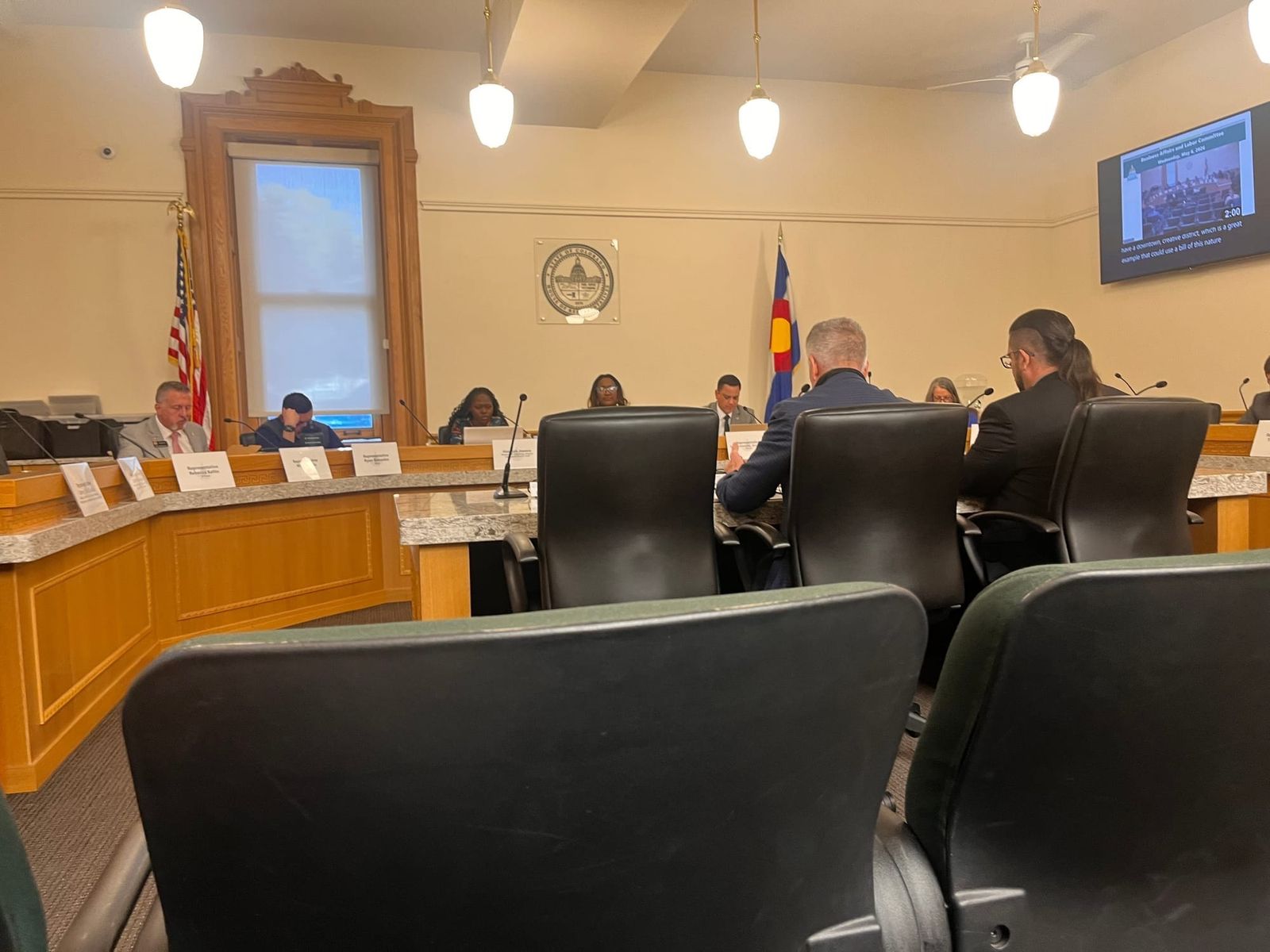
Our view from the hearing room.
Back to that snowy spring morning in Denver. We're sitting in the long wooden conference room in the belly of the Colorado State House. The committee members finish grilling Representatives Martinez and Taggart. It's time for our group to go to the table.
Sitting in a row are myself, painter Sarah Darlene, and Josh Blanchard from the Office of Economic Development. On Zoom are Lauren Click, a representative from the City of Boulder's Office of Arts & Culture, and Meredith Badler, our champion from CBCA.
One by one, each person shares why they support Artist Corporations. Each of us has two minutes.
That morning I'd written down what I planned to say, but in the moment I decide to ad-lib instead. I speak to the concerns raised earlier. I talk about this as a project with a long-term focus, trying to establish a new economic baseline. Everything I'd learned through the past year of talking to people expressed as simply as I could.
Then the representatives start asking questions. How would it work. What it would change day one. Why does this matter. Each of us answer from our vantage point. We speak to a wide range of experiences. The Colorado-based voices especially carry.
As people respond, I reflect on how each person had organically become part of this movement. We had been strangers a year before. Now we were making something happen together way bigger than what any of us could do on our own.
Our testimony concludes. It's time for the vote. They deliberate. Our advisor texts people who are texting people. "This is going to be close," he says for the third time.
Then the vote, one by one. Our lobbyist makes tallies on his sheet while I look over his shoulder. After a particular vote, he pumps his fist.
"We got it," he says.
When the tally is complete, we're through by a bigger margin than expected: 10-3. We make it.
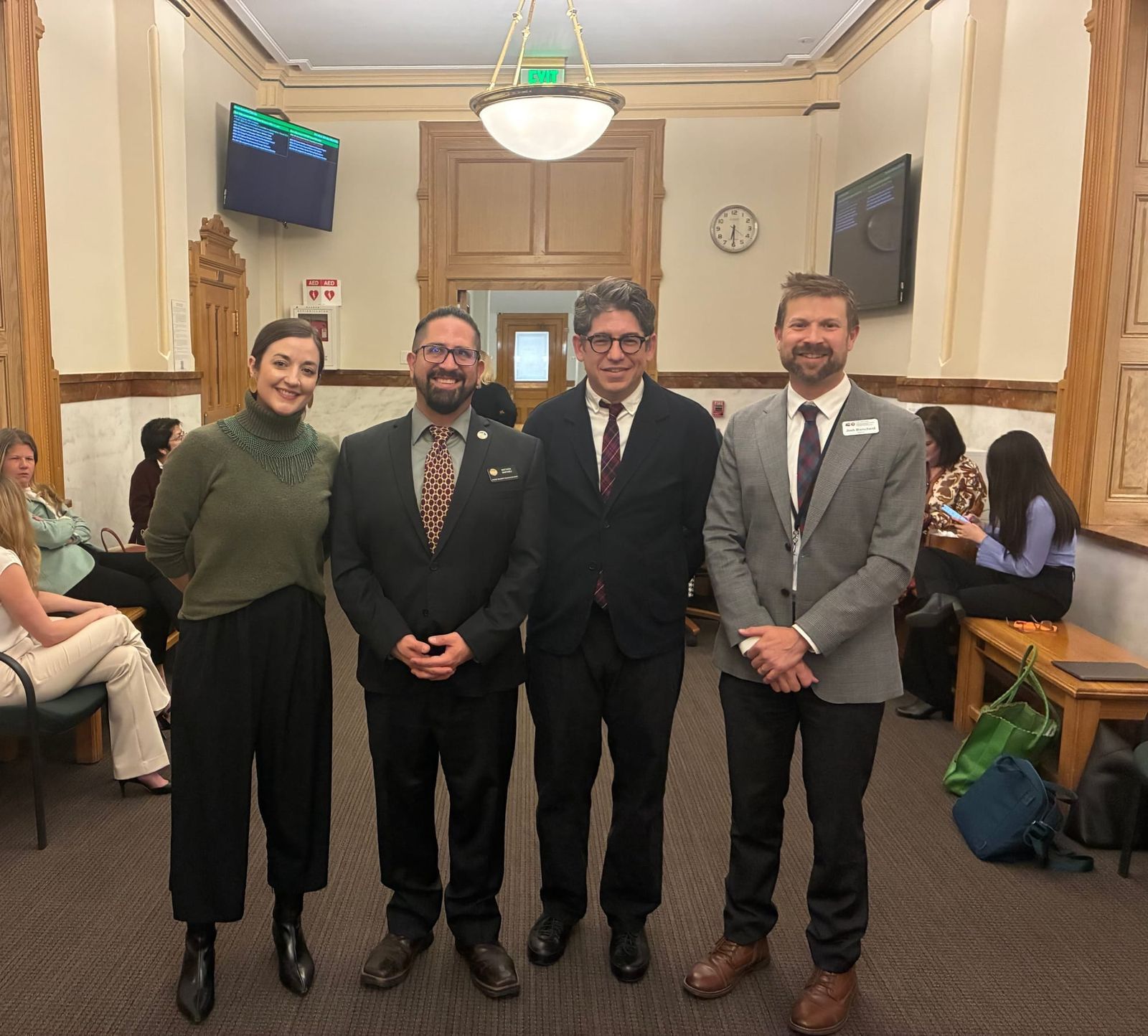
Artist Sarah Darlene, Representative Martinez, your author, and Josh Blanchard.
Next the House floor, a few days later. Here the margin is also significant. We get 49 votes — way more than we need.
We got our 18. We got our 33. Just one more to go.
Idea becomes law
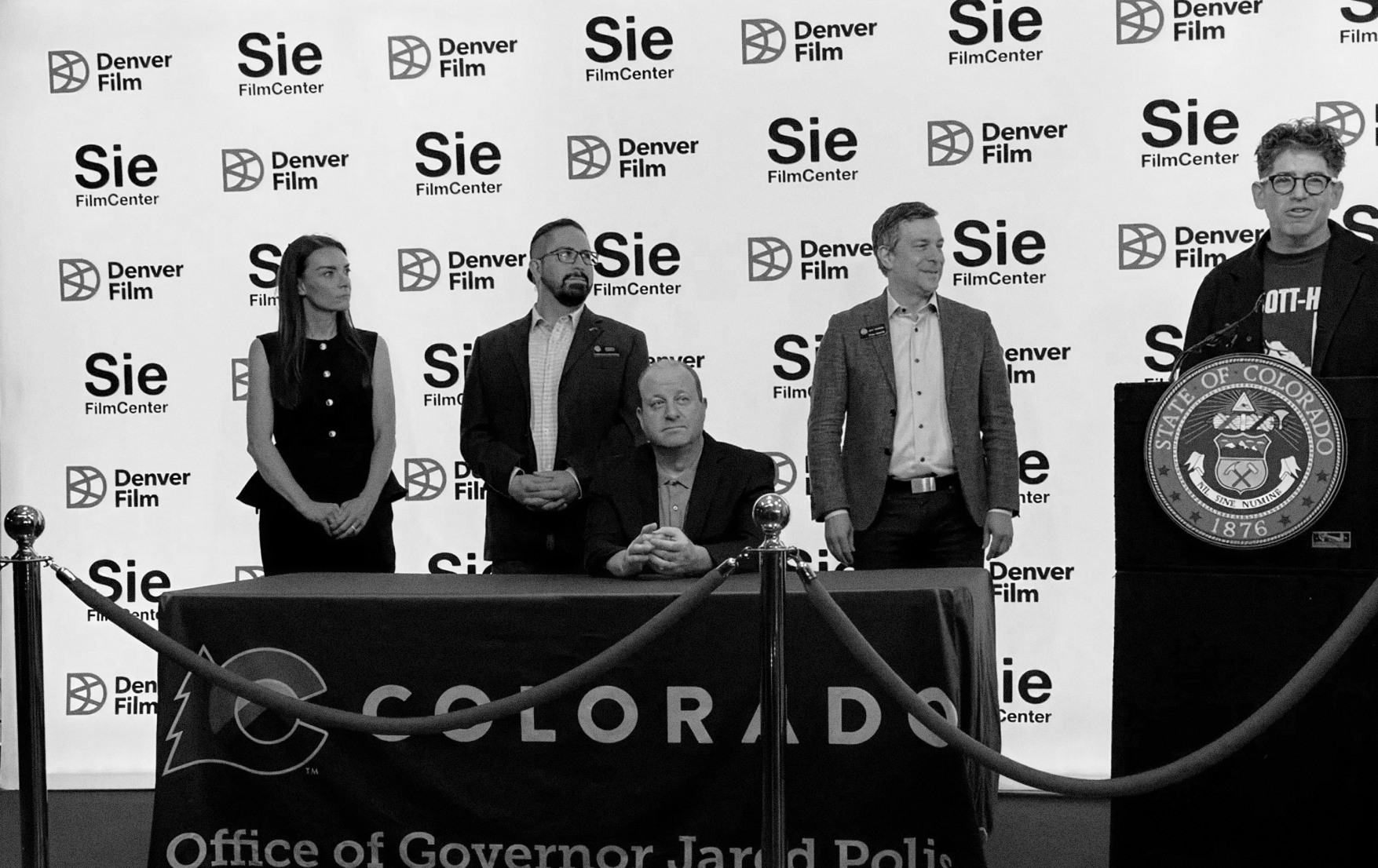
Back in Denver, this time in the lobby of the Sie FilmCenter. There's a red carpet, a step and repeat backdrop, and a red velvet rope, for unknown reasons. Behind it are a folding table and a podium with the seal of the Colorado Governor.
It's signing day.
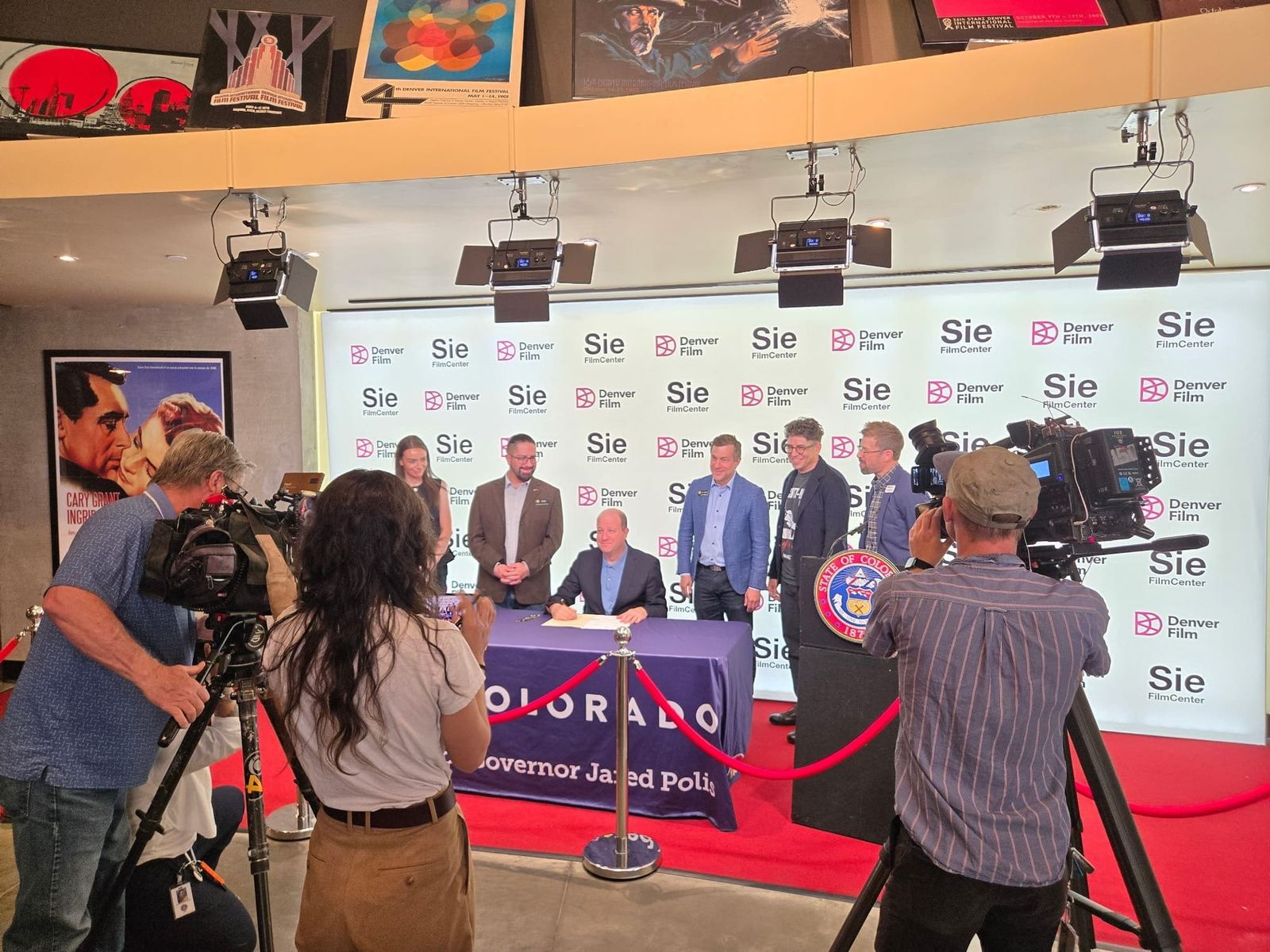
In the room are 30 to 40 people, all of them part of the journey up to this moment. Artists. Nonprofit leaders. Community representatives. The bill's sponsors. The whole Colorado team of a dozen-plus people who put their hearts into making this real. We hug. We high-five.
This is happening.
TV cameras set up their shots. Photographers take their places. Senator Bridges comes over to me.
"Are you speaking?" he asks.
"I don't think so," I say. "Nobody talked to me about speaking."
"You've got to speak," he says. "Hang on."
Minutes later one of Colorado Governor Polis' aides comes up to me. "You're speaking fourth," she says. I nod, scrambling to think about what feels right to say in this moment.
Just then, Governor Polis enters. The crowd opens up and makes room as he walks in, saying hellos. He shakes my hand and looks at me. I'm wearing a Gil Scott-Heron T-shirt with a blazer over it. He sizes me up.
"We're doing a good thing here today, aren't we?" he says.
"Yes, Governor," I respond.
Moments later, four of us stand behind the Governor as he addresses news cameras from the podium. He talks about the importance of Colorado being the first state in America to create the Artist Corporation, and how this will help artists here. Next Representative Martinez speaks, then Senator Bridges, then me.
I give what a friend later teasingly calls a grandiose speech. In my 50 seconds I try and speak to the moment, imagining that this work is just the start. That by a decade from now, we've built a real ecosystem of support that makes the creative life more secure, more rewarding, and more accessible than before. That's always been the target. Maybe, if we continue to do the real work, this can be part of the solution.
I end my speech at the press conference with a paraphrase of the same words I used to close the TED talk.
"Artists don't deserve pity. Artists deserve power. And together, we're building it. Starting here in Colorado."
Governor Polis moves to the table where the bill sits, ready to be signed. He alternates between four different pens, handing each of us one when he's done.
"Signed," he says.
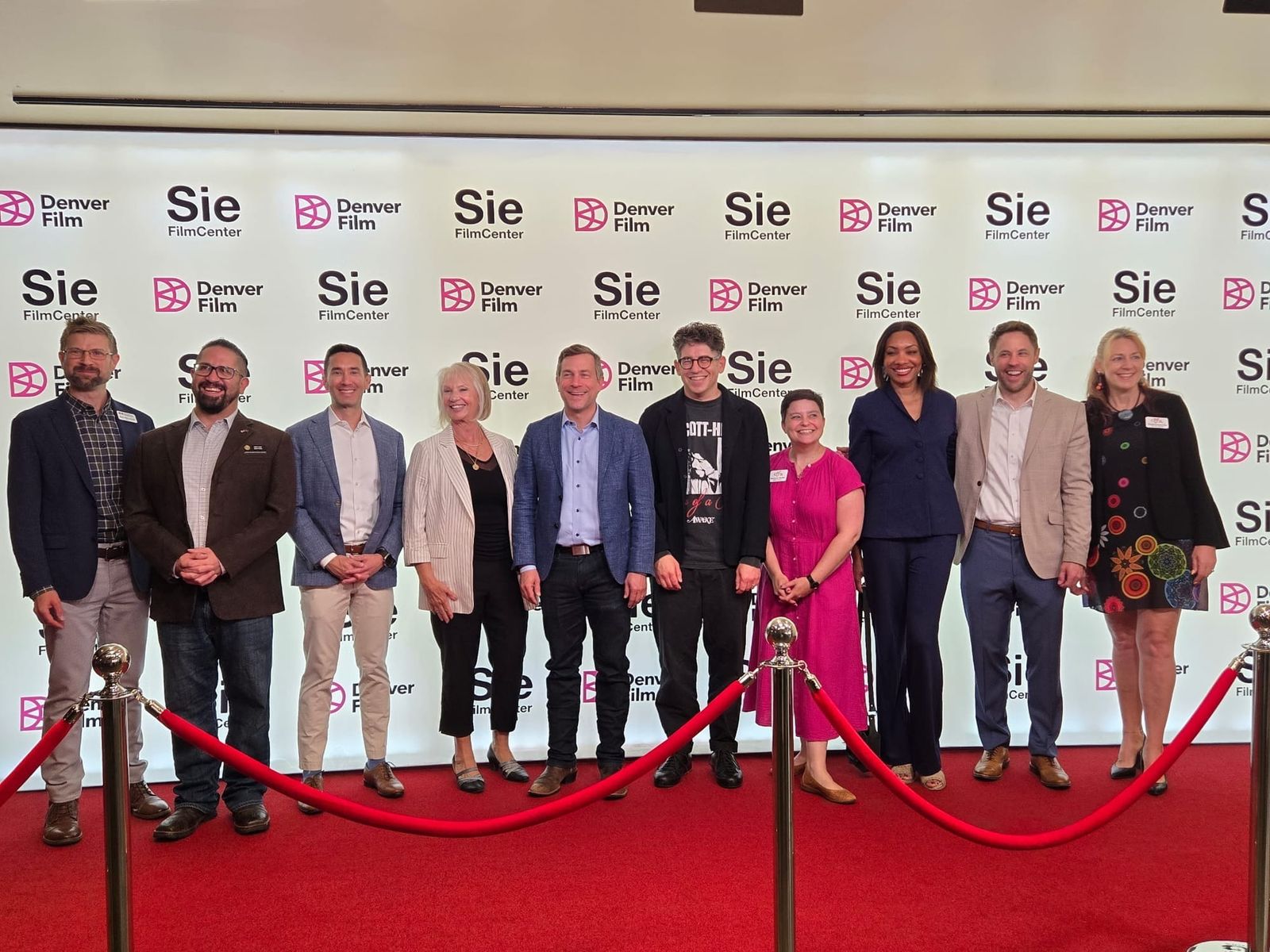
The Colorado team.
Though this project has many decades of work ahead of it, the first part was done.
The law was here.
What made the A-Corp work?
Looking back, I think four things made this outcome possible:
Framing the needs of creative people as economic empowerment and not a form of charity. Artists and creators themselves wanted this frame, the data and conversations showed, and it connected with people in charge. Artists want to be empowered, not coddled. Political figures were open to it.
Bipartisanship. From the beginning we set the goal that this would be a bipartisan bill. We don't want art and creativity to be only left or right. Creative expression is by and for everyone. By securing powerful Democratic and Republican sponsors, the bill became much more acceptable to those casting votes. This helped get it across the finish line.
Systemic templates. Ultimately the A-Corp law is making a new standard of a type of LLC for creative people that anyone can use. The fact that the work is focused on these kinds of standards, rather than mandating new spending, made the solution acceptable to those in charge.
Where the water is going. Colorado's creative economy contributes billions in economic activity and employs thousands of workers, making it easier to frame artists as an economic constituency rather than a charitable cause. We didn't have to convince people of our core argument. The facts on the ground around them told them exactly where we were.
What comes next
Passing the first Artist Corporation law establishes an important new story and recognition for artists and creative people. This is worth celebrating. But we also need to set the right expectations for what happens next.
To start, Artist Corporations will not allow you to do something you literally could not do before. Instead it makes something that previously required custom and expensive legal engineering an accessible template and foundation for all.
Should artists and creators adopt the Artist Corporation form in significant numbers, it could create new shared benefits: a recognized A-Corp share as an ownership instrument, a common framework that could eventually support group healthcare plans and other collective benefits, and intellectual-property and tax systems that become increasingly specialized around the needs of creative enterprises.
These would be hugely meaningful developments. Right now they are still speculative. The law we've passed makes these more possible, but there's still much work to be done.
Once people are able to start Artist Corporations in Colorado — early 2027 is our expectation — what will happen?
- Artists and creators will be able to form A-Corps
- The A-Corp will help them declare and legally protect their mission and purpose
- The A-Corp framework already contemplates important parts of how their practices operate, making the form feel natural and understandable
- Artists will be able to simply and reliably protect their intellectual property and work
- Shared ownership and collaborative equity arrangements will become simpler, more affordable, and more accessible
- A-Corp founders and members become part of a learning community together
- Artists spend less time reinventing governance documents and less money paying attorneys to draft bespoke agreements
These are all things that can happen soon. Where it goes from there will be up to all of us.
Today we launched a new website for Artist Corporations that includes a pre-registration form — a preview of an upcoming service we will provide when A-Corps can officially be created — and will grow with more resources, including model forms of agreements for A-Corps. We'll also be offering community education to support adoption both IRL in Colorado (we're in Boulder tomorrow, in fact) and online.
Other states will be launching their own A-Corp laws. California for the Arts will be leading efforts on the West Coast next year. We're in touch with lawmakers or officials in at least a half-dozen other states who are interested in introducing A-Corp bills.
There's a whole other part of this work that focuses on changes to the tax code, finding pathways for Artist Corporations to more easily accept philanthropic funds. We were late to the political process and the price tag was not something we could afford, but we'll return to this in the future.
Finally, this essay and work have focused on the mechanics of making a law, but the point isn't to create a new legal form. The goal is to grow the economic security, rights, and owned value of all artists and creators, no matter what legal form they do or do not use.
It's not the container that matters. It's who it serves and what they finally build with it.
We're already deep into this process. It's still just the beginning.
Originally published by Yancey Strickler. Written with infinite gratitude to the many exceptional people who collaborated on this work so far, and who will in the future. Thank you.